
Grocery Store Inventory Management: Tips for Franchise Owners
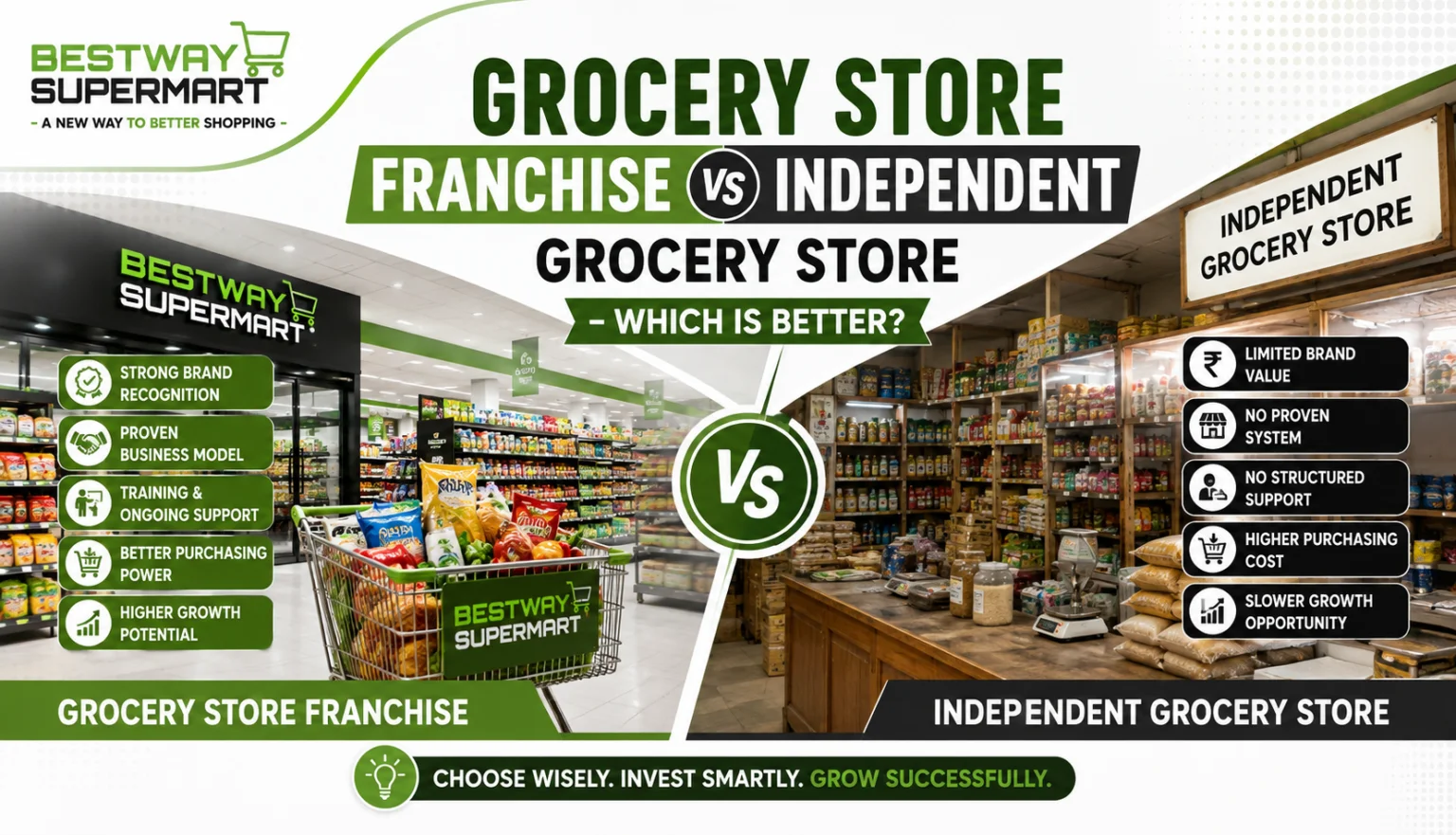
A grocery store can lose money in two very different ways: by having too much stock sitting on the shelves or by not having enough of the products customers want. Both problems can quietly affect profitability. This is why grocery store inventory management is one of the most important responsibilities for any grocery franchise owner.
Managing inventory is not simply counting products at the end of the month. It means knowing what is in stock, what is selling quickly, what needs replenishment, what is approaching its expiry date, and where money is getting tied up in unsold products. With a practical inventory system and regular monitoring, franchise owners can keep shelves full while reducing unnecessary waste.
Why Grocery Store Inventory Management Matters
Grocery stores deal with a wide variety of products, from long-life packaged foods to fresh vegetables, dairy, bakery products, beverages, cleaning supplies, and personal-care items. Each category behaves differently, which makes inventory management more complicated than simply maintaining a fixed stock level.
Good grocery store inventory management helps a store achieve the right balance between product availability and inventory cost.
Effective management can help:
- Reduce expired and damaged products
- Prevent frequent stockouts
- Improve cash flow
- Identify fast-moving products
- Control excess inventory
- Improve purchasing decisions
- Keep shelves consistently organized
For example, if a particular breakfast cereal sells quickly every weekend, knowing this pattern allows the store manager to prepare inventory before demand increases instead of waiting until the shelf becomes empty.
Create Different Inventory Categories
One inventory strategy does not work equally well for every product. Start by dividing products into logical categories according to their sales behavior and storage requirements.
A useful classification could include:
- Fast-moving products: Items that sell frequently and require regular replenishment.
- Slow-moving products: Items that remain in stock for longer periods.
- Perishable products: Fresh products with limited shelf life.
- Seasonal products: Items whose demand changes during particular periods.
- High-value products: Products requiring closer financial and stock monitoring.
This classification helps managers decide how frequently each category should be reviewed.
Use Supermarket Inventory Management to Track Fast-Moving Products
Fast-moving products deserve special attention because running out of them can lead to missed sales and disappointed customers.
Supermarket inventory management becomes much more effective when owners identify their highest-volume products and monitor them frequently.
For example, everyday staples such as milk, bread, rice, flour, cooking oil, or popular snacks may need more frequent checks than niche products with limited demand.
A simple process is:
- Identify your top-selling products.
- Monitor their sales regularly.
- Establish practical reorder levels.
- Check supplier delivery times.
- Replenish before stock becomes critically low.
The objective is not to hold enormous quantities. It is to maintain enough inventory to meet expected demand without unnecessarily tying up capital.
Follow the First-Expiry, First-Out Approach
Perishable products require particularly careful handling. One useful approach is First-Expiry, First-Out (FEFO), where products with the earliest expiry dates are prioritized for sale.
For example, if two batches of packaged dairy products are in storage and one expires sooner, staff should ensure the earlier-expiring batch is moved forward for sale first.
This can help reduce avoidable waste.
Employees should regularly check:
- Expiry dates
- Packaging condition
- Storage conditions
- Damaged products
- Products approaching their expiry period
For fresh categories, inventory checks may need to happen much more frequently than for long-life packaged goods.
Set Practical Reorder Levels
Waiting until a product completely runs out before placing an order can create unnecessary problems. Instead, establish a reorder point for important products.
The reorder point should consider factors such as average sales, supplier lead time, seasonal demand, and available storage space.
For example, if a product normally takes several days to arrive after ordering, the store should not wait until only a few units remain before contacting the supplier.
Reorder levels should also be reviewed over time because customer demand can change.
Use Technology for Better Grocery Store Inventory Management
Manual inventory records can become difficult to maintain when a supermarket has hundreds or thousands of products. POS and inventory-management software can make the process more organized.
Depending on the system, technology can help track:
- Product sales
- Current stock
- Purchase orders
- Product prices
- Stock movement
- Reorder requirements
- Sales trends
When a billing system is connected with inventory records, every sale can contribute to a more up-to-date picture of stock levels.
Technology does not eliminate the need for physical checks, but it can significantly reduce repetitive manual work.
Conduct Regular Physical Stock Checks
Even with good software, physical inventory checks remain important. Products can be damaged, misplaced, incorrectly recorded, or lost through operational errors.
Instead of waiting for one large annual stock count, consider using a combination of regular cycle counts and broader inventory audits.
For example, staff could check selected high-value or fast-moving categories more frequently while conducting comprehensive counts periodically.
This helps identify differences between recorded inventory and actual inventory.
Manage Supplier Relationships Carefully
Inventory management does not stop inside the store. Suppliers play an important role in keeping products available.
Track supplier performance based on:
- Delivery reliability
- Product quality
- Order accuracy
- Lead time
- Damaged products
- Pricing consistency
If a supplier regularly delivers late, the store may need to hold additional safety stock or consider alternative sourcing arrangements.
Strong supplier communication can make supermarket inventory management more predictable.
Avoid Overstocking Slow-Moving Products
Having a full warehouse can look positive, but excess inventory can actually create financial pressure.
Suppose a supermarket orders a large quantity of a specialty product because it believes the item will sell quickly. If customers do not show enough interest, the stock may remain unsold for months.
This ties up money and uses valuable storage space.
To manage slow-moving products, owners can:
- Review sales frequency
- Adjust future purchase quantities
- Improve product visibility
- Create suitable promotions
- Bundle related products where appropriate
- Discontinue products with consistently weak demand
The goal is to use inventory space efficiently.
Pay Attention to Seasonal Demand
Customer buying behavior changes throughout the year. Festivals, holidays, weather, school schedules, and local events can all affect grocery demand.
For example, certain snacks, beverages, gift packs, dry fruits, or cooking ingredients may experience increased demand during particular periods.
Good grocery store inventory management means preparing for these changes without overestimating demand.
Review previous sales patterns where available and place seasonal orders early enough to avoid supply problems.
Train Employees to Handle Inventory Correctly
Inventory accuracy depends heavily on employees. Staff should understand how products are received, stored, displayed, counted, and rotated.
Training should cover:
- Checking deliveries
- Recording damaged products
- Rotating stock
- Identifying expiry dates
- Updating inventory records
- Handling returns
- Keeping storage areas organized
Even a sophisticated inventory system will not perform effectively if employees do not follow consistent procedures.
Watch Inventory Performance Through Key Metrics
Franchise owners should regularly review inventory-related performance rather than relying on assumptions.
Useful measures may include:
- Stockout frequency
- Product wastage
- Inventory turnover
- Slow-moving stock
- Shrinkage
- Expired products
- Supplier delivery performance
These numbers can reveal where the store is losing money or where processes need improvement.
For example, if one category consistently produces high wastage, the owner can investigate purchasing quantities, product rotation, storage conditions, or customer demand.
Real-Life Example: Reducing Waste in a Dairy Section
Imagine a supermarket that regularly throws away unsold dairy products near their expiry dates. Instead of simply accepting the loss, the manager studies daily sales and notices that demand is lower on certain weekdays.
The store adjusts its ordering schedule and ensures earlier-expiring products receive priority on the shelves. Staff also conduct more frequent expiry checks.
The result is a more controlled inventory process without needing to eliminate the product category.
This is the practical value of good inventory management: small operational improvements can prevent repeated losses.
Common Grocery Inventory Mistakes to Avoid
Franchise owners should watch out for these common mistakes:
- Ordering based only on guesswork
- Ignoring sales history
- Keeping excessive safety stock
- Failing to rotate products
- Not checking incoming deliveries
- Ignoring damaged inventory
- Relying entirely on software
- Failing to train employees
- Not reviewing slow-moving products
Consistent monitoring is usually more effective than trying to fix inventory problems only when they become serious.
FAQs About Grocery Store Inventory Management
1. What is grocery store inventory management?
Grocery store inventory management is the process of purchasing, receiving, storing, tracking, rotating, and replenishing products so that the store maintains appropriate stock levels.
2. Why is supermarket inventory management important?
Supermarket inventory management helps reduce stockouts, excess inventory, product waste, and operational errors while supporting better purchasing and cash-flow decisions.
3. How often should grocery inventory be checked?
The frequency depends on the product category. Fast-moving and perishable products generally require more frequent checks than slow-moving, long-life products.
4. Can POS software manage supermarket inventory?
Many modern POS solutions include inventory-management features or integrations that can track sales and update stock records. Features vary by software provider.
5. How can a grocery store reduce expired products?
Use expiry-date checks, appropriate stock rotation, accurate ordering, FEFO practices for applicable products, and regular monitoring of slow-moving inventory.
6. What causes grocery stockouts?
Stockouts can result from inaccurate demand forecasting, delayed supplier deliveries, poor reorder planning, unexpected demand increases, or inventory-record errors.
7. How can franchise owners reduce excess inventory?
Analyze sales patterns, identify slow-moving products, adjust order quantities, monitor seasonal demand, and avoid purchasing large quantities without sufficient evidence of customer demand.
Final Thoughts: Build Smarter Inventory Operations
Effective grocery store inventory management is about finding the right balance: enough products to satisfy customers without allowing excessive stock, waste, or unnecessary costs to build up.
By monitoring fast-moving products, rotating inventory, setting practical reorder levels, using technology, checking physical stock, managing suppliers, and training employees, grocery franchise owners can create a more controlled and efficient operation.
For entrepreneurs exploring organized grocery retail, Bestway Supermart can be considered as a franchise opportunity while evaluating how structured retail operations can support a supermarket business.
Whether you are preparing to launch a new store or improving an existing outlet, make inventory a daily priority. The better you understand what sells, what sits, and what needs attention, the easier it becomes to keep your shelves ready for customers while protecting your business from avoidable inventory losses.