
What Is the FOFO Franchise Model? A Complete Guide for Supermarket Businesses
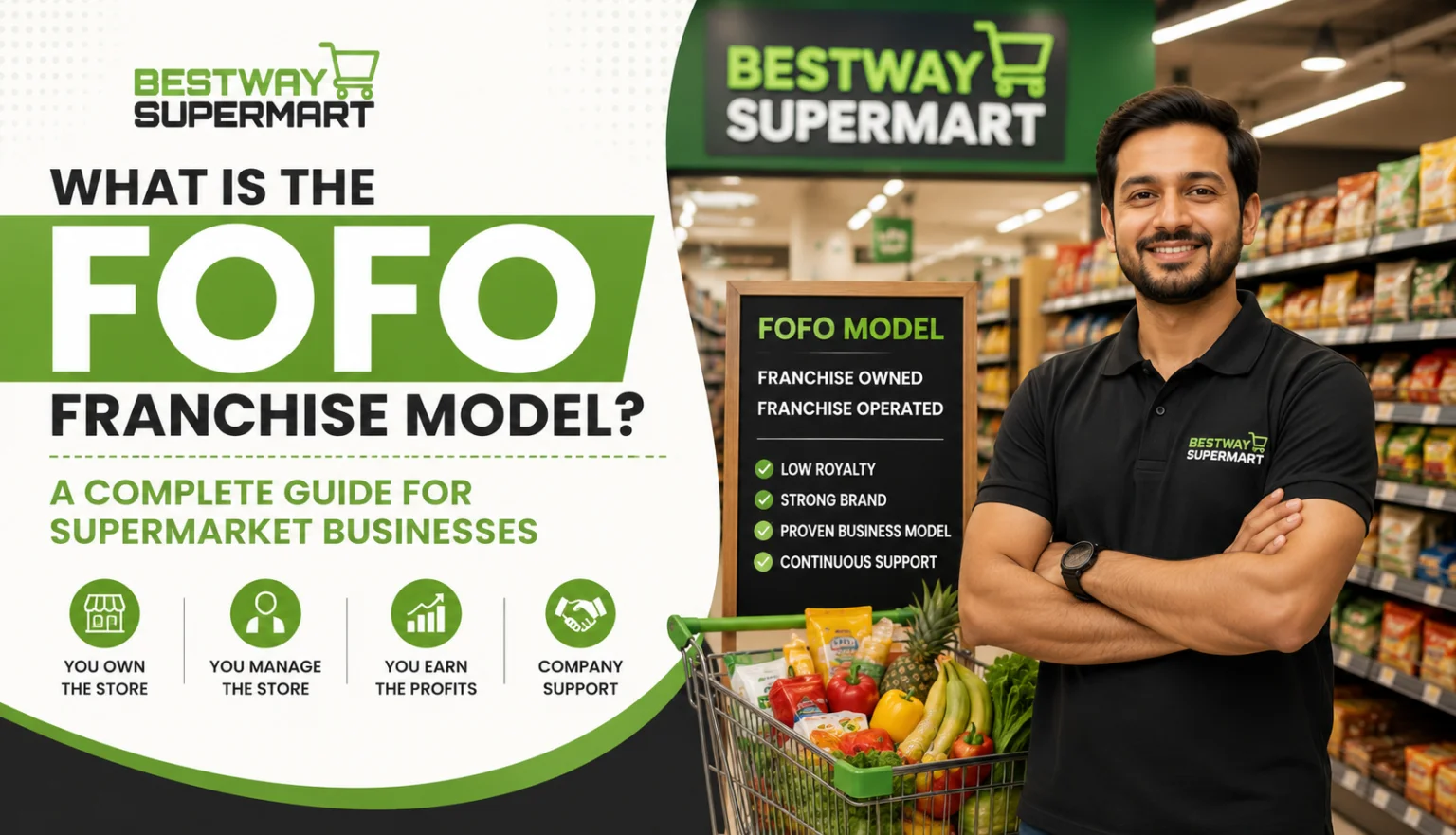
Imagine owning your own supermarket chain, establishing customer relationships in your area, managing everything at the store, and operating as an independent contractor under someone else’s trademark instead of creating and managing your own retail brand. Such an opportunity is especially attractive to those considering Supermarket Businesses, and the FOFO Franchise Model offers this combination of ownership and operations.
FOFO stands for Franchise Owned, Franchise Operated. In other words, the entrepreneur buys a franchise and manages the supermarket themselves, whereas the franchisor offers their brand, systems, management methods, support, training, and other services under the franchise contract.
Those interested in franchising a supermarket in India should understand how this particular business model works. So, let us discuss the FOFO Franchise Model, its general characteristics, cost, responsibilities, benefits, and more.
What Is the FOFO Franchise Model?
The FOFO Franchise Model stands for Franchise Owned, Franchise Operated. Unlike Company Operated stores, the individual entrepreneur participates in the management process of the supermarket.
In essence, the franchise owner has to invest in the outlet and manage the staff, customer base, inventory, sales, overall operations, and local market presence of the store. Meanwhile, the franchisor offers the franchisee a comprehensive business ecosystem within which they will operate.
Bestway Supermart describes the FOFO model as an opportunity to run and operate their own supermarket with the company’s support. According to their guidelines, the store size for this concept is between 500 and 5,000 square feet.
How Does the FOFO Franchise Model Work?
The FOFO Franchise Model presupposes a mutual partnership between the franchisor and franchisee. However, in this particular case, the obligations are rather one-sided, which means that the entrepreneur has to take on most responsibilities.
Generally, the franchisee has to invest in the supermarket store and manage it efficiently. As for the franchisor, they provide the franchisee with their brand, systems, and management model, as well as organize the operation of the store and offer support when needed.
For example, if an individual entrepreneur wanted to launch a chain of stores in their district or city, they would have to spend significant time, effort, and money on developing their own retail concept and trademark. Instead, they could opt for the FOFO model of franchising and become a part of the existing network. Thus, the individual would handle day-to-day operations, whereas the company would provide the necessary equipment, layout and interior design, staff training, management model, and other services.
According to Bestway Supermart’s FOFO model description, they offer store area selection, layout and design, branding services, purchase support, online and offline advertising and marketing services, software support, training and recruitment of staff, and employee dress code among other benefits.
Store Requirements for Bestway Supermart’s FOFO Franchise Model
Perhaps, one of the main concerns of an individual entrepreneur interested in franchising a supermarket is knowing how much space and the amount of their own investment they will have to cover.
According to Bestway Supermart’s website, the FOFO model provides different options with varying store size, franchise fee, software fee, minimum order value, interior design, and lock-in period. Here are some details:
- Store Size: 500–5,000 sq. ft.
- Franchise Fee for up to 1,000 sq. ft.: ₹3 Lakh + GST
- Franchise Fee for up to 5,000 sq. ft.: ₹4 Lakh + GST
- Software Fee: ₹50,000 per login
- Minimum Product Order: ₹1,200–₹1,500 per sq. ft.
- Interior Design: ₹1,200 per sq. ft. according to the company layout
- Agreement Lock-in Period: 5 years
- Royalty: Nil
However, it is crucial that potential franchisees understand that these are only the general guidelines provided by the company directly. It is always better to calculate their own projected costs and contact the company to confirm the details before signing any contracts and making any investments.
What Are the Benefits of the FOFO Franchise Model for Supermarket Businesses?
The benefits of the FOFO Franchise Model usually come down to what an individual entrepreneur can gain from being a part of the network and running their own supermarket store under someone else’s trademark.
The main advantage of the FOFO model, compared to Company Operated stores, is that the franchise owner has direct control over supermarket operations and can make decisions in the best interest of their business, while following the terms and standards of the franchise agreement.
1. Ownership and Active Participation
The FOFO Franchise Model offers business ownership and lets an entrepreneur participate actively in supermarket management. The individual franchise owner can manage decisions regarding sales, customers, inventory, staff, and other factors influencing store performance.
2. Existing Brand and Supermarket Concept
The main benefit of the FOFO model, compared to launching a retail business independently, is an established brand image, which can save the entrepreneur significant time and effort they would otherwise spend developing their own retail concept and brand identity.
3. Interior Design and Store Equipment
The interior design of a store is one of the important aspects of a supermarket franchise. The layout of a supermarket can influence customer traffic flow, product placement, accessibility, and the overall shopping experience.
According to Bestway Supermart’s FOFO model terms, the company offers store layout and design support to its franchise owners.
4. Advertising and Marketing Support
A strong marketing strategy can play an important role in attracting customers to a retail store. The FOFO Franchise Model can provide access to the franchisor’s marketing and advertising support, allowing the franchisee to benefit from the brand’s established promotional framework.
In Bestway Supermart’s case, the company offers online and offline advertising and marketing support for its FOFO franchise owners.
5. No Royalty Fee in Bestway Supermart’s FOFO Franchise Model
One of the notable benefits offered by Bestway Supermart’s FOFO franchise model is that the company does not charge a royalty fee, according to its official franchise information.
Every franchisor can have different commercial terms, so potential franchise owners should always verify the current fee structure and all applicable charges before making an investment.
What Does the Owner of a FOFO Franchise Store Manage?
The FOFO Franchise Model provides ownership, which also means that the franchisee has important operational and financial responsibilities.
According to Bestway Supermart’s published information, its FOFO franchise owners are responsible for the following:
- Interior: The franchisee has to complete the interior according to the company’s design guidelines.
- Rent and Electricity: The franchise owner is responsible for applicable premises rent and electricity expenses.
- Software Charges: The franchisee has to cover the applicable software charges.
- Hardware: Required hardware is to be purchased by the franchise owner according to the company’s requirements.
- Employee Guidelines: The franchise owner has to follow the company’s employee-related guidelines.
- Sanitization: The franchise owner has to maintain appropriate sanitization standards according to the company’s guidelines.
The list of responsibilities is important to understand, which is why it is essential to review the franchise agreement carefully before signing it and becoming legally bound by its terms.
FOFO vs. FOCO Franchise Models: What Are the Differences?
An entrepreneur interested in franchising a supermarket will often come across two concepts: FOFO and FOCO franchise models.
FOFO refers to Franchise Owned, Franchise Operated, whereas FOCO stands for Franchise Owned, Company Operated.
In simple terms:
- FOFO: The franchisee owns and operates the store.
- FOCO: The franchisee owns the store while the company operates it, subject to the specific franchise agreement.
The difference between these two supermarket franchise models is primarily reflected in responsibilities, operational involvement, expenses, and management.
According to Bestway Supermart’s official website, its FOCO stores range from 1,000 to 20,000 sq. ft., while its FOFO model covers stores from 500 to 5,000 sq. ft.
Ultimately, the decision between FOFO and FOCO depends on the entrepreneur’s preferred level of involvement. If an entrepreneur wants to actively participate in running their own business, FOFO may be more suitable. If they prefer to leave day-to-day operations to the company, FOCO may be worth considering.
Is the FOFO Franchise Model Appropriate for First-Time Entrepreneurs?
The FOFO Franchise Model can be an interesting opportunity for first-time entrepreneurs who want to become part of an established retail network but may not want to develop their own supermarket concept from the ground up.
However, the FOFO model requires active involvement. The franchisee needs to understand the local market, manage staff, monitor inventory, maintain customer service, control expenses, and pay attention to day-to-day store performance.
For example, if the supermarket is located in a large residential area, the entrepreneur should understand which products local residents purchase regularly. Fast-moving grocery products need to remain available, while slow-moving products may require better inventory planning or promotional strategies.
What to Consider When Investing in a FOFO Franchise?
Before choosing the FOFO Franchise Model, an entrepreneur should understand that a successful Supermarket Business depends on several factors, including location, product selection, pricing, customer service, inventory management, and operational efficiency.
Before investing, carefully evaluate:
- Location: Choose a location with suitable customer demand and accessibility.
- Inventory: Understand which products are likely to have strong local demand.
- Pricing: Maintain competitive and customer-friendly pricing.
- Management: Be prepared for active involvement in daily operations.
- Expenses: Consider franchise fees, rent, electricity, inventory, salaries, hardware, software, and working capital.
- Marketing: Understand both franchisor-supported and local marketing requirements.
- Agreement Terms: Read the complete franchise agreement carefully.
- Renewal: Understand the renewal conditions and applicable charges.
- Exit Options: Know the process and conditions for exiting the franchise.
- Responsibilities: Clearly understand the obligations of both franchisor and franchisee.
A franchise should be evaluated as a complete business opportunity rather than based on the franchise fee alone.
Final Thoughts:
The FOFO Franchise Model offers entrepreneurs an opportunity to own and actively operate a supermarket while benefiting from an established franchise structure. Instead of building a retail concept completely from scratch, franchise owners can operate under an established brand and access defined systems, support, training, and marketing assistance.
For entrepreneurs exploring Supermarket Businesses, Bestway Supermart’s FOFO model currently offers store sizes ranging from 500 to 5,000 sq. ft., franchise fees based on store size, company support, a five-year lock-in period, and no royalty charge according to its published franchise information.
However, choosing a franchise should never be based only on the brand name or franchise fee. Location, customer demand, working capital, inventory management, operating expenses, staff management, and the complete franchise agreement all deserve careful consideration.
If you are ready to explore the FOFO Franchise Model and want to understand how you can start your own supermarket with Bestway Supermart, visit the official franchise page and connect with the company to discuss the latest investment requirements, store options, support, and franchise terms.
FAQs About the FOFO Franchise Model
What Does FOFO Stand for in a Supermarket Franchise?
FOFO stands for Franchise Owned, Franchise Operated. The entrepreneur owns the store and actively participates in managing its operations.
How Big Is the Store for Bestway Supermart’s FOFO Supermarket Franchise?
Bestway Supermart’s website states that its FOFO franchise model covers store sizes from 500 to 5,000 sq. ft.
What Is the Franchise Fee for Bestway Supermart’s FOFO Supermarket Franchise?
According to the company’s published information:
- Up to 1,000 sq. ft.: ₹3 Lakh + GST
- Up to 5,000 sq. ft.: ₹4 Lakh + GST
Potential franchisees should confirm the latest commercial terms directly with Bestway Supermart before investing.
Does Bestway Supermart’s FOFO Supermarket Franchise Have a Royalty Charge?
According to Bestway Supermart’s official franchise information, its FOFO model has no royalty charge.
What Is the Duration of the Agreement for Bestway Supermart’s FOFO Supermarket Franchise?
The company currently lists a 5-year lock-in period for its FOFO franchise model.
Who Manages the Supermarket Under the FOFO Franchise Model?
Under the FOFO Franchise Model, the franchisee manages and operates the supermarket. Therefore, the owner needs to be actively involved in the business.
Is a FOFO Supermarket Franchise Better Than FOCO?
There is no universal answer. FOFO is more suitable for entrepreneurs who want to actively operate their store, while FOCO may be better suited to those who prefer a company-operated model. The right choice depends on the entrepreneur’s goals, investment capacity, and desired level of involvement.