
Bestway Supermart
How to Choose the Best Location Supermarket Franchise?

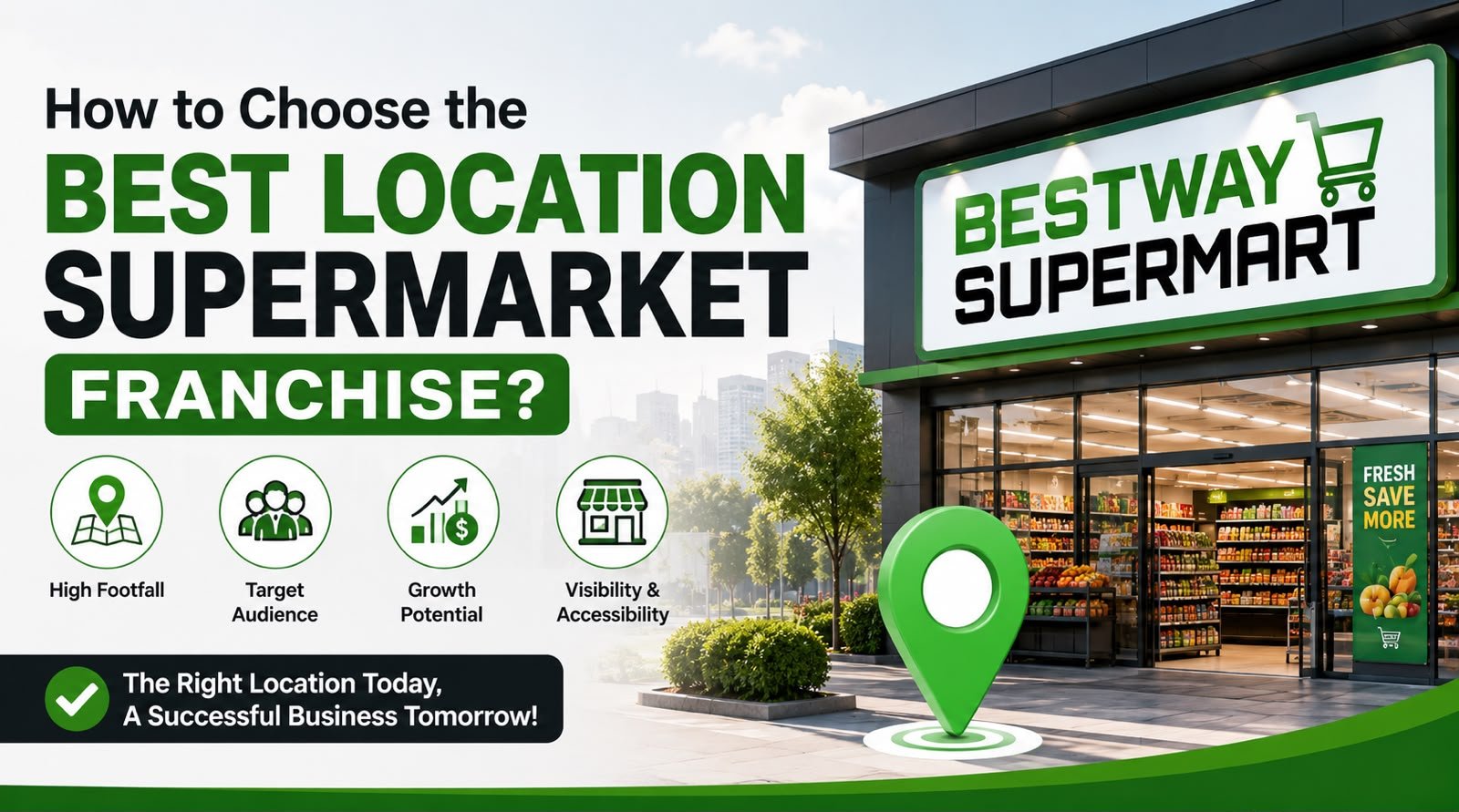
Choosing the right location can make or break a supermarket business. You can have a strong brand, attractive interiors, competitive prices and a wide product range, but if customers cannot easily find or access your store, growth can become difficult. This is why selecting the Best Location Supermarket Franchise should be one of the first and most important decisions before investing in a retail business.
For entrepreneurs planning to start a Grocery Store Franchise, location is more than just finding an available shop. You need to understand where your target customers live, how frequently they shop, what competitors are nearby, whether the area is growing and whether the location can support your business for years to come.
Why Location Matters for a Supermarket Franchise
A supermarket depends heavily on regular customer visits. Unlike businesses where customers may travel long distances for a specialised service, grocery shopping is often driven by convenience. Customers generally prefer stores that are close to their homes, easy to reach and capable of fulfilling their everyday requirements.
A good location can help a supermarket benefit from repeat purchases, neighbourhood demand and word-of-mouth recommendations. On the other hand, an unsuitable location can result in low footfall and high marketing expenses even when the store offers good products and services.
The Best Location Supermarket Franchise is therefore one where customer demand, accessibility, competition and operating costs work together in your favour.
Understand Your Target Customers Before Choosing a Location
Before looking at properties, understand who your potential customers will be. A supermarket serving a premium residential society may have different product requirements and spending patterns compared with a store located in a densely populated middle-income neighbourhood.
Study factors such as:
- Population: How many people live around the proposed store?
- Household profile: Understand family size, income patterns and lifestyle.
- Shopping habits: Determine how frequently customers purchase groceries.
- Purchasing power: Assess whether the local market matches your product positioning.
- Age group: Families, working professionals and students may have different requirements.
For example, suppose two locations are available for a supermarket. One has a busy commercial market but limited residential population, while the other is surrounded by several housing societies. The second location could potentially provide stronger repeat grocery demand, even if its overall road traffic appears lower.
How to Find the Best Location Supermarket Franchise
Finding the right location requires more than checking whether a property is available. You should physically visit the area at different times of the day and observe how people move around the neighbourhood.
1. Look for Strong Residential Catchment
Residential areas can be highly valuable for supermarkets because groceries and household essentials are recurring purchases. Housing societies, apartment clusters, residential colonies and developing neighbourhoods can provide a consistent customer base.
Ideally, assess how many households are within a convenient distance of the proposed store and whether additional residential projects are under development.
2. Check Footfall and Visibility
Footfall is important, but relevant footfall matters even more. A location may have thousands of people passing by, but if they are not your potential customers, the traffic may not translate into sales.
Check:
- Pedestrian movement
- Vehicle traffic
- Visibility from the main road
- Nearby shops and businesses
- Peak shopping hours
- Evening and weekend activity
A supermarket that is clearly visible from the road can have an advantage in attracting both regular and impulse shoppers.
3. Analyse Nearby Competition
Competition should not automatically be considered a negative factor. In some cases, the presence of grocery stores indicates that there is already established demand in the area.
However, you should understand what competitors are offering. Visit nearby supermarkets and local grocery stores and compare:
- Product variety
- Pricing
- Store size
- Customer service
- Parking
- Offers and discounts
- Delivery services
- Store cleanliness
Your objective should be to identify a gap that your supermarket can fill.
Accessibility and Parking Can Influence Supermarket Success
Customers may avoid a supermarket if reaching it is inconvenient. Even an excellent store can struggle if customers cannot easily enter, exit or park their vehicles.
When evaluating the Best Location Supermarket Franchise, consider whether customers can comfortably reach the store by car, two-wheeler or public transport.
Important accessibility factors include:
- Main-road connectivity
- Parking availability
- Road width
- Entry and exit points
- Public transport connectivity
- Traffic congestion
- Ease of loading and unloading
For a supermarket, parking can be particularly important because customers often purchase multiple products at once.
Evaluate Rent and Overall Operating Costs
A premium location may generate strong visibility, but extremely high rent can put pressure on profitability. The goal is not necessarily to find the cheapest property. Instead, find a location where expected sales potential justifies the operating cost.
Before finalising a property, calculate expenses such as:
- Monthly rent
- Security deposit
- Electricity
- Staff salaries
- Maintenance
- Inventory
- Marketing
- Technology and billing systems
- Local taxes or applicable charges
A location with slightly lower footfall but significantly lower operating costs may sometimes be more financially sustainable than an expensive high-street property.
Consider Future Growth of the Area
One of the most overlooked aspects of selecting a Grocery Store Franchise location is future development.
Look beyond the current situation. Is the neighbourhood expected to receive new residential projects? Are roads or metro connectivity improving? Are new offices, schools or commercial developments coming nearby?
For example, a developing residential zone may have limited demand today but could become densely populated within a few years. Entering such an area at the right time could provide a first-mover advantage.
However, future growth should always be verified through reliable local market research rather than assumptions.
Conduct a Local Market Survey Before Investing
Once you shortlist a location, spend time studying the area personally. Talk to residents, shopkeepers and nearby businesses. Ask simple questions about where people currently purchase groceries and what they would like to see in a new supermarket.
You can also observe the area during:
- Morning hours
- Afternoon
- Evening
- Weekends
- Salary periods or month-end
This real-world information can be more useful than simply looking at property listings.
How a Franchise Brand Can Help You Select a Location
A good franchise relationship should not end with providing a brand name. Entrepreneurs can benefit from professional guidance when evaluating potential locations, depending on the franchisor’s support structure.
For someone entering organised retail for the first time, understanding customer catchment, store layout, competition, product planning and operational requirements can make the location-selection process more systematic.
Before choosing a franchise, ask whether the company provides guidance related to location evaluation, store planning, setup, branding, operations, technology and marketing.
Common Mistakes to Avoid When Selecting a Supermarket Location
Many entrepreneurs make location decisions based purely on rent or property availability. Avoid these common mistakes:
- Choosing a property without studying local demand
- Ignoring nearby competitors
- Selecting a location with poor parking
- Paying excessive rent for visibility alone
- Ignoring future development
- Not checking accessibility
- Failing to study customer purchasing behaviour
- Making decisions without visiting the area multiple times
A few additional days of research before signing an agreement can potentially save you from significant business challenges later.
Best Location Supermarket Franchise: A Practical Checklist
Before finalising your location, ask yourself:
Is there sufficient residential demand?
The surrounding population should be large enough to support regular grocery purchases.
Is the store easy to access?
Customers should be able to reach the supermarket conveniently.
Is parking available?
Adequate parking can improve the shopping experience.
Is competition manageable?
Study competitors and identify opportunities to differentiate your store.
Is the rent financially practical?
Your projected revenue should justify the total occupancy cost.
Does the area have future potential?
Look for sustainable residential and commercial growth.
Frequently Asked Questions
1. What is the most important factor when choosing a supermarket location?
Customer demand is one of the most important factors. A location surrounded by the right target audience can provide stronger potential for repeat purchases.
2. Is a Grocery Store Franchise good for a residential area?
Yes, residential areas can be suitable because groceries and household essentials are regularly purchased. Housing societies and residential clusters can provide a strong local customer base.
3. Should I choose a high-footfall location for my supermarket?
High footfall can help, but relevant customer footfall is more important. A location with the right target customers can be more valuable than a location with high but irrelevant traffic.
4. How important is parking for a supermarket?
Parking can be very important, particularly for customers purchasing monthly groceries and multiple household products. Convenient parking can improve customer experience and encourage repeat visits.
5. Should I choose a location with competitors nearby?
Not necessarily a bad idea. Competitors may indicate existing demand. However, you should identify how your supermarket can offer better convenience, assortment, pricing, service or shopping experience.
6. Can a franchise company help with location selection?
Depending on the franchise brand and agreement, professional location guidance may be available. Always ask about location evaluation and site-selection support before investing.
Final Thoughts: Choose the Best Location Supermarket Franchise Carefully
The right location is the foundation of a successful supermarket business. Population, customer profile, accessibility, parking, competition, rent, visibility and future development should all be evaluated before making the final decision.
The Best Location Supermarket Franchise is not simply the property with the highest footfall or the lowest rent. It is the location where customer demand and business economics create a sustainable opportunity.
If you are planning to enter organised retail, Bestway Supermart can be explored as a franchise opportunity. With the right location, proper planning and a customer-focused approach, your supermarket can become a trusted shopping destination in the local community.
Ready to explore your supermarket franchise opportunity? Connect with Bestway Supermart today and discuss the right location and franchise model for your business goals.