
How to Manage Staff in a Supermarket Franchise?
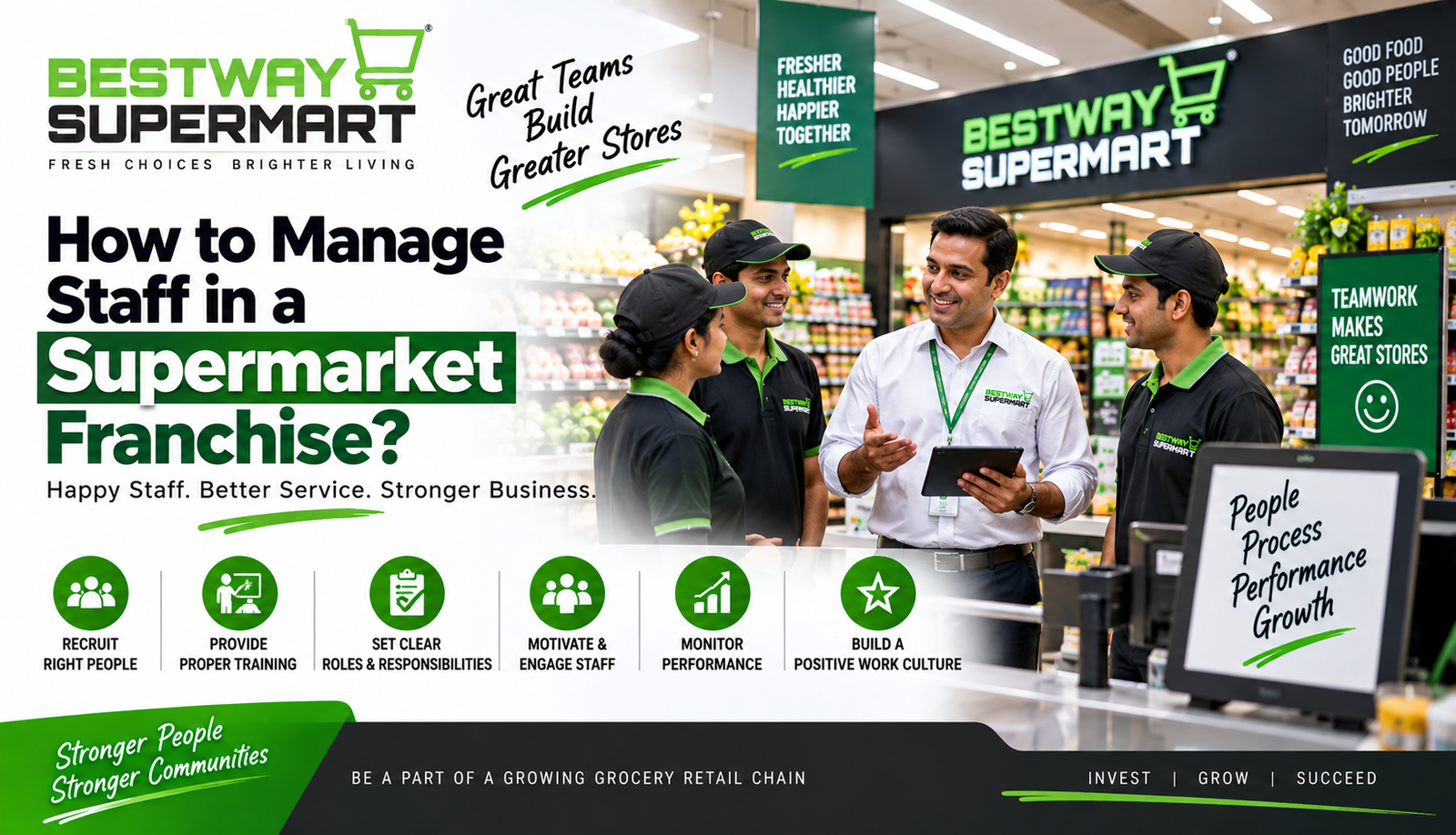
Running a supermarket franchise is not only about having the right products, attractive displays, or a good location. The people working inside the store have a major impact on how customers experience the business. A friendly cashier, an attentive floor executive, or a well-organized inventory employee can turn an ordinary shopping trip into a positive experience. This is why supermarket staff management should be treated as an important part of daily business operations.
Good staff management helps franchise owners maintain discipline, reduce mistakes, improve customer service, and keep employees motivated. Whether you are opening a small neighborhood grocery store or managing a larger supermarket franchise, having a clear staff-management system can make everyday operations much easier.
Why Supermarket Staff Management Matters
A supermarket can have hundreds or even thousands of products, but employees are the people who keep everything moving. From receiving stock and arranging shelves to handling billing and helping customers, every team member has a specific responsibility.
Effective supermarket staff management creates a structured working environment where employees understand what they need to do and when they need to do it. Without proper coordination, even a busy supermarket can face problems such as empty shelves, slow billing, misplaced products, customer complaints, and poor inventory control.
For example, imagine a customer looking for a particular cooking oil. If employees are not properly assigned to different sections, the customer may have to search alone or wait for assistance. A trained floor employee can quickly identify the product and guide the customer, creating a much better shopping experience.
Build a Clear Supermarket Staff Structure
Before focusing on performance, franchise owners should establish a simple organizational structure. Employees should know who they report to and which responsibilities belong to them.
A typical supermarket team may include:
- Store Manager: Handles overall store operations and staff coordination.
- Department Supervisors: Manage specific sections such as grocery, dairy, fresh produce, or household products.
- Sales/Floor Staff: Help customers and maintain product displays.
- Cashiers: Manage billing, payments, returns, and customer queries at the checkout.
- Inventory Staff: Check incoming stock, storage, and product availability.
- Cleaning and Support Staff: Maintain cleanliness and basic store hygiene.
Clear roles prevent confusion. Instead of several employees assuming that someone else will complete a task, each person understands their responsibility.
Create Effective Staff Management Procedures
One of the easiest ways to improve supermarket staff management is to create standard procedures for repetitive tasks. Employees should not have to guess how important activities should be performed.
For example, opening procedures could include checking store cleanliness, switching on equipment, inspecting shelves, checking promotional displays, and preparing billing counters. Closing procedures might include stock checks, cleaning, cash reconciliation, and securing the store.
Written or digital checklists can make these processes easier to follow.
Use Daily Task Allocation
At the beginning of every shift, the supervisor can briefly explain the day’s priorities. This does not need to be a long meeting. Even a five-minute staff briefing can help everyone understand what needs attention.
A daily task list could include:
- Restocking fast-moving products
- Checking price labels
- Organizing promotional shelves
- Cleaning specific areas
- Monitoring expiry dates
- Supporting busy billing counters
- Checking customer requests
This simple system makes supermarket staff management more organized and measurable.
Train Employees for Better Customer Service
Customers remember how they were treated. Therefore, staff training should not focus only on technical tasks. Employees should also learn how to communicate professionally with shoppers.
Training can cover greeting customers, answering basic product questions, handling complaints, guiding customers to different sections, and maintaining polite communication during busy periods.
For example, if a customer complains about a long billing queue, an employee should not respond negatively. Instead, they can politely acknowledge the concern and inform the supervisor so another checkout counter can be opened if staff availability permits.
This approach improves customer satisfaction while teaching employees how to handle real-world situations.
Use Grocery Store Staff Management to Improve Teamwork
Grocery store staff management is particularly important because supermarket employees often work across different departments. A problem in one section can affect another.
For instance, if the inventory team receives a new shipment but does not communicate with the floor team, products may remain in storage while customers see empty shelves. Better communication between departments can prevent this situation.
Regular communication can include:
- Short shift meetings
- Department updates
- Daily task boards
- Manager check-ins
- Digital communication groups
- Weekly performance discussions
The objective is not to constantly monitor employees. It is to make sure information moves quickly between the people who need it.
Manage Staff Shifts According to Customer Traffic
A supermarket does not experience the same customer volume throughout the day. Certain hours may be considerably busier than others. Staff scheduling should reflect these patterns.
During peak hours, more employees may be required at checkout counters and customer-service areas. During quieter periods, staff can focus on shelf arrangement, cleaning, inventory checks, and other operational tasks.
A practical approach is to review sales and customer-traffic patterns regularly and adjust shifts accordingly.
This helps prevent two common problems: having too many employees during quiet hours or having too few employees when the store becomes crowded.
Motivate Employees Without Creating Unhealthy Pressure
Employee motivation plays an important role in long-term supermarket performance. Staff members are more likely to perform consistently when they feel their efforts are recognized.
Motivation does not always have to involve large financial rewards. Franchise owners can use simple methods such as:
- Employee appreciation
- Performance recognition
- Small incentives
- Skill-development opportunities
- Flexible scheduling where practical
- Clear promotion opportunities
For example, an employee who consistently receives positive customer feedback could be recognized during a weekly team meeting. Small gestures like this can create a more positive workplace culture.
Monitor Performance With Practical KPIs
Good supermarket staff management should include performance measurement, but the focus should be on useful metrics rather than unnecessary pressure.
Depending on the employee’s role, useful indicators may include:
- Billing accuracy
- Customer complaints
- Shelf-restocking completion
- Attendance and punctuality
- Inventory errors
- Task completion
- Customer-service feedback
Managers should use these metrics to identify areas where employees need additional support or training.
If a particular employee repeatedly makes billing mistakes, for example, the solution may be additional training rather than immediate punishment.
Handle Staff Conflicts Professionally
Conflicts can happen in any workplace. Employees may disagree about responsibilities, shifts, communication, or workload. Ignoring these problems can eventually affect the entire team.
The manager should listen to both sides, identify the actual issue, and establish a fair solution. Personal arguments should not be allowed to interfere with customer service.
A professional conflict-resolution process can include:
- Listen to each employee separately.
- Understand the actual problem.
- Review workplace policies.
- Discuss a practical solution.
- Follow up afterward.
This creates a more stable working environment.
Make Technology Part of Staff Management
Modern supermarket operations can benefit from technology. POS systems, inventory software, attendance tools, scheduling applications, and digital task-management systems can reduce manual work.
For example, an inventory system can help staff identify products that need attention, while a digital scheduling system can make shift planning easier.
Technology should support employees rather than make their jobs unnecessarily complicated. Before introducing a new system, staff should receive proper training.
Common Staff Management Mistakes to Avoid
Even experienced franchise owners can make management mistakes. Some common problems include:
- Giving unclear instructions
- Changing schedules at the last minute unnecessarily
- Ignoring employee feedback
- Providing little or no training
- Treating every employee exactly the same despite different responsibilities
- Failing to recognize good performance
- Micromanaging every small task
- Not addressing repeated workplace problems
The best approach is to maintain clear expectations while giving employees enough responsibility to perform their roles independently.
FAQs About Supermarket Staff Management
1. What is supermarket staff management?
Supermarket staff management involves hiring, training, scheduling, supervising, motivating, and evaluating employees to ensure smooth store operations and quality customer service.
2. How many employees does a supermarket need?
The required number depends on store size, operating hours, customer volume, departments, and services. A small grocery store may need a compact team, while a large supermarket requires employees across multiple departments.
3. How can supermarket employees be motivated?
Recognition, fair treatment, training, incentives, career opportunities, and a positive workplace environment can help improve employee motivation.
4. Why is staff training important in a supermarket?
Training helps employees understand their responsibilities, communicate better with customers, reduce mistakes, and follow store procedures consistently.
5. What is grocery store staff management?
Grocery store staff management refers to organizing and supervising employees working in a grocery or supermarket environment. It includes scheduling, training, task allocation, customer service, and performance monitoring.
6. How can a manager reduce staff-related mistakes?
Clear responsibilities, checklists, employee training, regular communication, and performance reviews can help identify and reduce recurring mistakes.
7. How does staff management affect supermarket profitability?
Well-managed employees can improve customer service, reduce operational errors, maintain better product availability, and create a smoother shopping experience. These factors can contribute to stronger store performance.
Final Thoughts: Build a Stronger Supermarket Team
Successful supermarket operations depend on more than products and pricing. The employees interacting with customers and managing daily store activities have a direct influence on the shopping experience. Effective supermarket staff management creates better coordination, stronger accountability, improved customer service, and smoother operations.
If you are planning to start or grow a supermarket franchise, choosing the right franchise model and learning how to manage its day-to-day operations can give you a stronger foundation. Bestway Supermart can be considered as part of your franchise journey when exploring opportunities in the supermarket and grocery retail sector.
Focus on hiring the right people, training them properly, communicating clearly, and recognizing good performance. When your staff understands the business goals and feels valued as part of the team, your supermarket has a much better chance of delivering consistent service and building loyal customers.