
How to Start a Supermarket Franchise Business in India?.
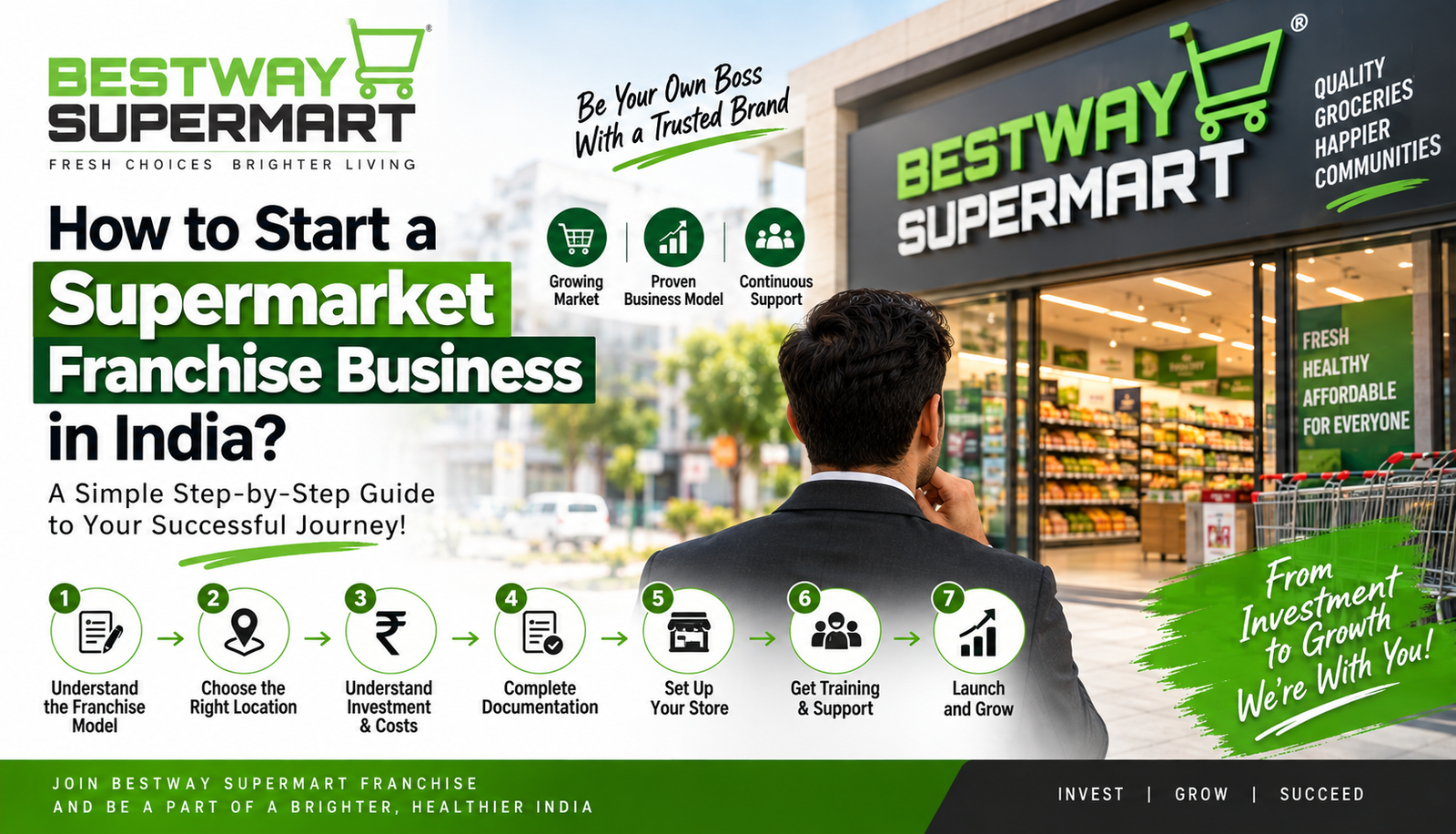
India’s retail market is changing rapidly, and grocery shopping remains one of the most consistent consumer needs. From daily essentials and packaged foods to personal-care products and household items, supermarkets serve products that customers purchase regularly. This makes a supermarket franchise business in India an attractive opportunity for entrepreneurs who want to enter the organized retail sector with an established business model.
However, starting a supermarket franchise is more than renting a shop and filling it with products. You need to understand the franchise model, investment requirements, location, store operations, suppliers, staffing, technology, marketing, and customer expectations. If you are wondering how to start supermarket franchise, this guide will walk you through the major steps in a practical and easy-to-understand way.
Why Start a Supermarket Franchise Business in India?
A supermarket franchise can provide an opportunity to operate under an established brand instead of developing a completely new retail identity from the beginning. Depending on the franchise company, you may receive support related to store planning, branding, product sourcing, training, technology, and marketing.
The biggest advantage is that you can build your business around an everyday requirement: groceries and household essentials.
Some potential benefits include:
- Established brand identity: Customers may recognize the franchise brand more easily than a completely new store.
- Business guidance: Franchise companies may provide operational and training support.
- Product assortment: A defined product mix can make inventory planning easier.
- Marketing support: Franchisees may receive promotional materials and campaign assistance.
- Repeat customers: Grocery purchases can encourage frequent visits when the store is convenient.
These advantages do not guarantee success. Your results will still depend on location, execution, customer service, pricing, inventory management, and local demand.
How to Start Supermarket Franchise in India: First Steps
The first step in understanding how to start supermarket franchise is to decide what type of supermarket you want to operate. Not every supermarket serves the same customer segment.
You could consider a neighborhood grocery supermarket, a larger family-oriented store, a value-focused supermarket, or a premium grocery concept.
Before approaching franchise companies, think about your target market. Ask yourself:
- Who will be your primary customers?
- What products do households in the area purchase regularly?
- How much space can you arrange?
- What level of investment can you comfortably manage?
- Do you want to operate independently or under a franchise brand?
- What type of support do you expect from the franchisor?
Having clear answers will help you compare opportunities more intelligently.
Choose the Right Supermarket Franchise Brand
Choosing the franchise partner is one of the most important decisions in building a supermarket franchise business in India. Do not select a brand simply because its name is familiar. Study the complete franchise proposition.
Look at factors such as:
Brand positioning: Understand whether the brand targets budget-conscious, mainstream, or premium shoppers.
Franchise support: Check what assistance is provided before and after the store opens.
Product sourcing: Understand where products come from and how inventory is replenished.
Training: Ask whether staff and franchise owners receive operational training.
Technology: Find out whether billing, inventory, loyalty programs, and reporting systems are provided.
Marketing: Understand what promotional support is included and what expenses remain your responsibility.
A good franchise relationship should be transparent about responsibilities, costs, expectations, and ongoing support.
Evaluate the Investment Carefully
One of the first questions entrepreneurs ask about a supermarket franchise business in India is, “How much money will I need?”
There is no single investment figure because costs vary considerably depending on the brand, city, store format, property size, rent, interiors, inventory, staffing, and equipment.
Your financial planning may need to account for:
- Franchise or brand-related fees
- Security deposit or property advance
- Store interiors
- Shelving and displays
- Refrigeration equipment
- Billing/POS systems
- Initial inventory
- Staff salaries
- Licenses and registrations
- Signage and branding
- Launch marketing
- Working capital
Working capital is particularly important. A new store may need sufficient funds to manage regular expenses while sales and customer traffic are still developing.
Instead of focusing only on the initial investment, prepare a realistic operating budget for the first several months.
Find a Suitable Store Location
Location can determine how easily customers discover and access your supermarket. A store may have excellent products and competitive pricing, but if customers find it difficult to reach, the business may struggle to generate repeat visits.
When evaluating properties, consider:
- Nearby residential communities
- Population and household density
- Road visibility
- Customer accessibility
- Parking availability
- Local competition
- Rental costs
- Nearby complementary businesses
- Future development in the area
For a neighborhood supermarket, convenience can be particularly important. Customers often prefer stores that fit naturally into their daily route.
For example, a supermarket located close to residential apartments may benefit from customers stopping by after work to purchase milk, vegetables, snacks, cleaning products, and other household essentials.
Complete Registrations and Compliance
Once you have selected the franchise and property, you need to understand the registrations and permissions applicable to your business.
Requirements can vary according to your business structure, location, products, employees, and local regulations. Depending on the circumstances, you may need registrations or licenses relating to taxation, food retailing, shops and establishments, local authorities, employees, and other applicable requirements.
Before opening, consult an appropriate professional or relevant government authority to confirm which registrations apply to your specific supermarket.
Do not assume that another franchise store has exactly the same requirements as yours. Local rules and business circumstances can differ.
Design the Supermarket for Easy Shopping
A supermarket should make shopping simple. Customers should be able to enter, understand the store layout, find products, compare options, and complete payment without unnecessary confusion.
Plan sections logically. For example:
- Fresh and packaged foods
- Dairy and beverages
- Snacks and confectionery
- Household cleaning
- Personal care
- Staples and grains
- Baby-care products
- Other daily-use essentials
Clear signage and organized shelves can improve the customer experience. Place frequently purchased products where they are easy to find, while related products can be positioned together to encourage convenient additional purchases.
Build an Efficient Inventory System
Inventory management is one of the most important operational responsibilities in a supermarket franchise business in India.
Too much inventory can lock up your money and increase the risk of damaged or expired products. Too little inventory can result in stockouts and disappointed customers.
A good inventory process should monitor:
- Fast-moving products
- Slow-moving products
- Expiry dates
- Reorder levels
- Supplier deliveries
- Stock discrepancies
- Seasonal demand
Technology can make this process easier by connecting sales data with inventory records.
For example, if a particular product sells rapidly every weekend, the store can plan stock levels accordingly instead of discovering the shortage after customers start asking for it.
Hire and Train the Right Staff
Your employees directly influence the shopping experience. Friendly, knowledgeable, and responsible staff can make customers more comfortable and encourage repeat visits.
Depending on the store size, you may need employees for:
- Billing
- Shelf management
- Inventory
- Customer assistance
- Cleaning
- Store supervision
- Receiving and stock handling
Training should cover product handling, customer service, billing procedures, stock management, hygiene, and store policies.
Launch Your Supermarket with Local Marketing
Opening the doors is only the beginning. You need to make people in the surrounding area aware of the store.
A local marketing strategy can include:
- Google Business Profile optimization
- Social media promotion
- Local digital advertising
- Opening offers
- Flyers and neighborhood promotions
- Loyalty programs
- WhatsApp communication
- Referral campaigns
Your marketing should focus on practical customer benefits such as convenience, product variety, offers, store accessibility, and service.
The objective is not simply to attract people once. The bigger goal is to turn first-time visitors into regular customers.
Track Performance After Launch
Once the store is operational, regularly review its performance instead of relying only on total sales.
Important indicators can include:
- Daily sales
- Average bill value
- Customer visits
- Repeat purchases
- Inventory turnover
- Product-level sales
- Stockouts
- Wastage
- Marketing results
Suppose a supermarket has strong customer traffic but a low average bill value. The owner can investigate product assortment, promotions, pricing, and merchandising to understand the reason.
Regular analysis helps you make decisions based on actual customer behavior.
Common Mistakes New Franchise Owners Should Avoid
New entrepreneurs sometimes concentrate heavily on the opening day and underestimate the importance of long-term operations.
Avoid mistakes such as choosing a location without proper research, underestimating working capital, ordering excessive inventory, ignoring customer feedback, hiring without training, or spending heavily on products that do not match local demand.
Another common mistake is assuming that a recognized franchise brand will automatically bring customers. A strong brand can help, but local execution remains essential.
A successful supermarket franchise business in India requires continuous attention to customers, costs, inventory, employees, and competition.
FAQs About Starting a Supermarket Franchise
1. How to start supermarket franchise in India?
To understand how to start supermarket franchise, begin by choosing your store format, researching franchise brands, evaluating investment requirements, selecting a suitable location, completing applicable registrations, setting up the store, hiring staff, stocking products, and launching local marketing.
2. How much investment is required for a supermarket franchise?
Investment varies by franchise brand, city, store size, property costs, interiors, inventory, equipment, and working capital. Always request a detailed cost breakdown from the franchise company before making a decision.
3. Is a supermarket franchise profitable in India?
A supermarket franchise can become profitable, but profitability is not guaranteed. Location, customer demand, product margins, inventory control, rent, operating expenses, and customer retention all influence financial performance.
4. How much space is required for a supermarket franchise?
Space requirements depend on the franchise format and product assortment. Ask the franchisor for the recommended store size before finalizing a property.
5. What products should a supermarket sell?
A supermarket can offer groceries, packaged foods, beverages, dairy products, household essentials, personal-care products, snacks, staples, and other products based on local customer demand and the franchise’s product strategy.
6. Is supermarket franchise better than starting an independent store?
A franchise may offer branding, systems, training, sourcing, and operational support, while an independent store may provide greater flexibility. The better option depends on your goals, resources, experience, and preferred level of support.
7. How important is location for a supermarket?
Location is extremely important because supermarkets depend heavily on convenience and repeat customers. Accessibility, residential demand, visibility, parking, competition, and rental costs should all be considered.
Final Thoughts: Build Your Supermarket the Right Way
Starting a supermarket franchise business in India can be an exciting opportunity for entrepreneurs who want to enter the organized grocery retail sector. But success begins long before the first customer walks through the door.
Take time to understand the franchise model, calculate your complete investment, research the local market, choose the right property, organize inventory, train employees, and develop a customer-focused marketing strategy. Most importantly, select a franchise partner that provides clear terms and practical support.
If you are exploring a supermarket franchise opportunity, Bestway Supermart can be considered as a brand to explore for your retail business plans. Evaluate the opportunity carefully, understand the requirements, and choose a model that aligns with your market and business goals.
Ready to explore the next step? Connect with Bestway Supermart to learn more about its supermarket franchise opportunity and start planning your retail journey.