
Is a Supermarket Franchise Investment a Good Investment in 2026?
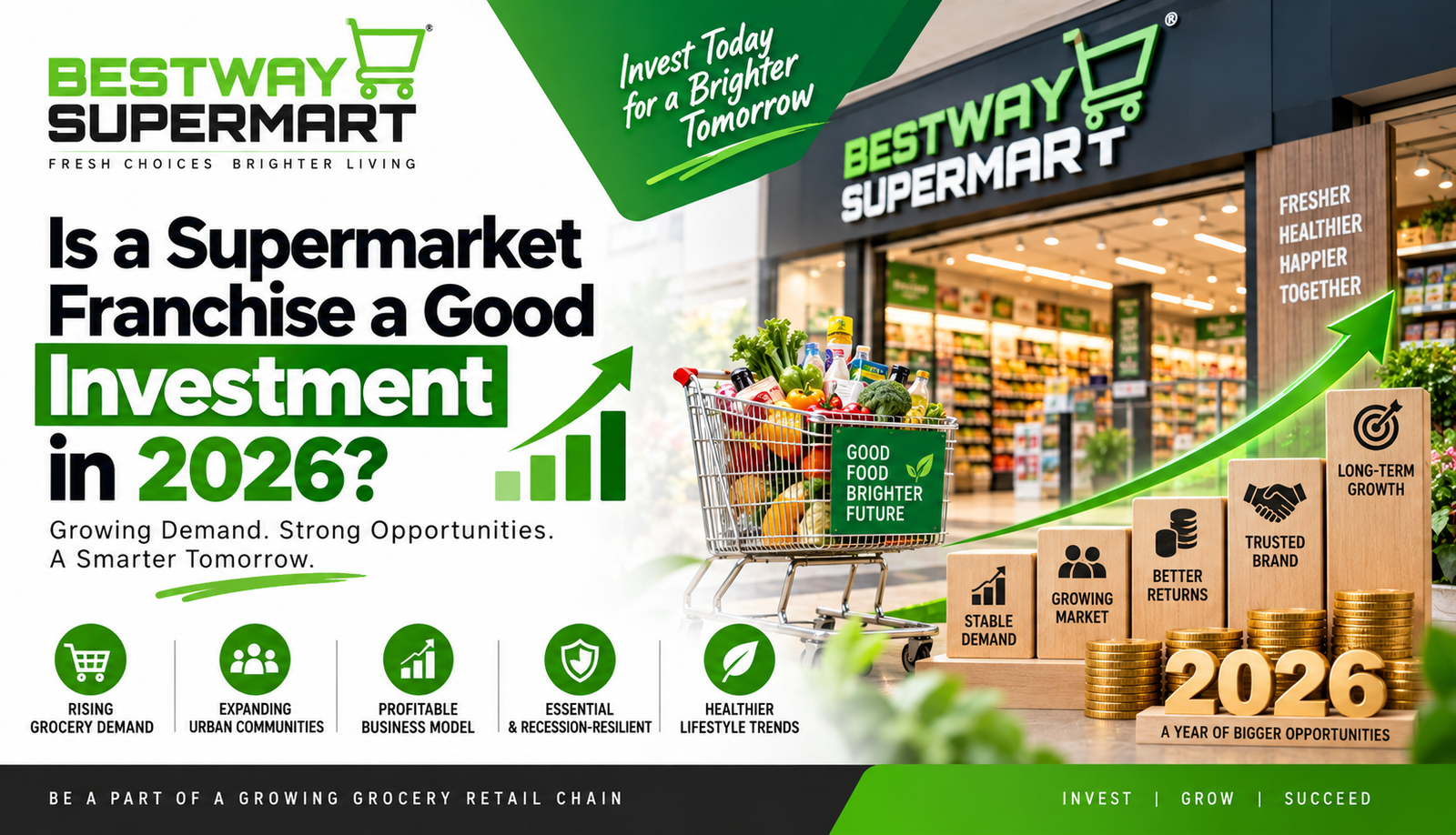
Imagine owning a retail business where customers need your products every week—not once a year. Groceries, household essentials, packaged foods, personal-care products, and daily-use items are part of everyday life. That recurring demand is one reason a supermarket franchise investment can look attractive to entrepreneurs in 2026.
But is it actually a good investment?
The answer depends on much more than the popularity of supermarkets. Your location, franchise partner, store format, rent, investment capacity, inventory management, customer demand, competition, and operating discipline can all influence the outcome. A supermarket franchise can provide a structured way to enter grocery retail, but it should be approached as a serious business decision rather than a guaranteed source of income.
So, if you are considering a supermarket franchise investment 2026, let’s look at the opportunity from a practical investor’s perspective.
Why Consider a Supermarket Franchise Investment in 2026?
The biggest attraction of supermarket retail is the nature of its products. Groceries and household essentials are generally recurring-need purchases. People may postpone buying a new television or smartphone, but everyday food and household products continue to be purchased.
A franchise model can add another layer of opportunity by allowing an entrepreneur to operate under an established retail identity and potentially access predefined systems.
Depending on the franchise, support may include:
- Branding: Store identity and visual standards.
- Training: Guidance for franchise owners and employees.
- Store setup: Assistance with layout, merchandising, and opening.
- Product sourcing: Established supply and procurement systems.
- Technology: POS, billing, inventory, or reporting systems.
- Marketing: Promotional guidance and campaign support.
However, these benefits differ between franchise companies. Investors should always verify exactly what is included before signing an agreement.
Supermarket Franchise Investment 2026: What Makes It Attractive?
The retail environment in 2026 presents several factors that can make supermarket businesses worth investigating. Consumers increasingly value convenience, product variety, organized shopping experiences, and reliable availability.
A neighborhood supermarket can potentially benefit from a combination of offline and digital shopping habits. Customers might discover a store online, check its products or offers, and then visit physically. Others may prefer ordering through digital channels while relying on a familiar local supermarket.
This creates an opportunity for franchise owners who can combine traditional retail operations with modern customer engagement.
Supermarket Franchise Investment and Recurring Customer Demand
One of the strongest arguments for a supermarket franchise investment is the possibility of repeat business. Grocery shopping is naturally repetitive.
A customer who is satisfied with your pricing, product availability, cleanliness, service, and convenience may return regularly.
For example, consider a family living in a residential neighborhood. They may purchase vegetables, milk, packaged foods, cleaning products, snacks, toiletries, and household supplies several times throughout the month. If your supermarket becomes their convenient shopping destination, individual purchases can turn into an ongoing customer relationship.
That does not mean every supermarket automatically gets loyal customers. Consistency is what helps create repeat business.
How Much Does a Supermarket Franchise Investment Cost?
There is no universal investment amount for a supermarket franchise. The actual requirement can vary significantly according to the franchise brand, city, store format, property, store size, interiors, equipment, initial inventory, and working capital.
Potential expenses can include:
- Franchise-related fees
- Property deposit
- Monthly rent
- Store interiors
- Shelving and fixtures
- Refrigeration
- Billing and POS equipment
- Initial inventory
- Signage
- Employee salaries
- Licenses and registrations
- Launch marketing
- Working capital
One important point is that investors should not spend their entire available capital on store setup.
A supermarket also needs money to operate after opening. Salaries, utilities, inventory replenishment, maintenance, promotions, and other expenses continue even while the customer base is developing.
Therefore, a sensible supermarket franchise investment 2026 plan should include both setup costs and sufficient working capital.
Location Can Determine Investment Performance
A supermarket’s financial performance can be strongly influenced by where it operates.
A high-quality location can potentially provide better visibility and customer convenience, while a poorly positioned store may struggle even with an attractive product range.
When evaluating a property, consider:
- Nearby households
- Residential population
- Customer purchasing behavior
- Visibility from the road
- Accessibility
- Parking
- Local competitors
- Rent
- Nearby offices or institutions
- Future development
For example, a store inside a growing residential community may have a strong opportunity to develop repeat customers as more families move into the area.
The lesson is simple: do not choose a property only because it looks affordable. Analyze the customers who can realistically reach the store.
Supermarket Franchise Investment: Understand the Profitability Factors
Revenue alone does not determine whether a supermarket is a good investment. What matters is how effectively the business converts sales into sustainable operating profits.
Several factors can influence profitability.
Gross margin: Different product categories may have different margins.
Rent: Excessively high rent can put pressure on the store’s finances.
Inventory turnover: Products should move efficiently rather than remaining on shelves for too long.
Wastage: Perishable and expiry-sensitive products require careful management.
Staff costs: Employee expenses need to remain aligned with store operations.
Customer retention: Repeat customers can be valuable for long-term sales.
Average transaction value: Encouraging customers to purchase relevant products can increase revenue per visit.
An investor should examine these factors together rather than focusing on a single percentage or promised return.
Is a Supermarket Franchise Better Than an Independent Store?
This is an important question for anyone considering supermarket franchise investment.
An independent supermarket gives you greater control over branding, suppliers, pricing, product selection, and business decisions. However, you are also responsible for building the brand and developing operational systems yourself.
A franchise may provide a more structured model, established branding, and operational support, but it can involve franchise fees, brand rules, and contractual obligations.
A franchise may be more suitable for someone who values a defined business framework, while an independent store may appeal to an entrepreneur who wants maximum flexibility.
Neither model is automatically better for every investor.
What Are the Risks of Supermarket Franchise Investment 2026?
Every business investment carries risk, and supermarket retail is no exception.
Some risks include:
- High operating costs: Rent, salaries, electricity, and maintenance can affect margins.
- Strong competition: Local supermarkets, neighborhood stores, and online grocery platforms can compete for customers.
- Inventory losses: Expired, damaged, or slow-moving products can reduce profitability.
- Location risk: A weak location can limit customer traffic.
- Changing customer preferences: Shoppers may increasingly expect digital ordering and convenient delivery.
- Franchise restrictions: Franchise agreements may limit certain business decisions.
The best way to manage these risks is to identify them before investing rather than after the store opens.
How to Decide If a Supermarket Franchise Is Right for You
Before committing to a supermarket franchise investment, create a simple investment checklist.
Ask:
- Can I comfortably fund the initial setup?
- Do I have enough working capital?
- Does the proposed location have genuine customer demand?
- What exactly does the franchise company provide?
- What are my ongoing franchise obligations?
- What are the estimated operating expenses?
- Who are my major competitors?
- What happens if sales are lower than expected?
- How will I manage inventory?
- What is my long-term business goal?
Do not make the decision based solely on projected sales figures. Request clear financial assumptions and understand which costs are included and which are not.
How a Franchise Owner Can Improve Business Performance
Once the store opens, the work does not stop. Strong day-to-day execution can make a significant difference.
Focus on:
- Keeping popular products consistently available
- Monitoring slow-moving inventory
- Maintaining clean and organized shelves
- Training employees properly
- Tracking daily sales
- Understanding customer feedback
- Running relevant local promotions
- Building customer loyalty
- Maintaining accurate billing and stock records
A supermarket is ultimately a customer-experience business. Competitive prices may attract customers, but convenience and consistent service can encourage them to return.
FAQs About Supermarket Franchise Investment
1. Is supermarket franchise investment a good idea in 2026?
It can be a good business opportunity for the right investor, but success is not guaranteed. Location, investment level, franchise terms, customer demand, competition, and operational management should be carefully evaluated.
2. What is supermarket franchise investment 2026 likely to include?
A typical investment plan may include franchise-related costs, property expenses, interiors, equipment, inventory, staffing, licenses, marketing, and working capital. Exact costs depend on the franchise and store format.
3. Is a supermarket franchise profitable?
A supermarket can be profitable when sales, margins, inventory turnover, rent, staffing, and other operating expenses are managed effectively. Actual profitability varies from store to store.
4. What is the biggest risk in supermarket franchise investment?
There is no single biggest risk for every business. High rent, weak customer demand, poor inventory management, intense competition, and insufficient working capital can all create significant challenges.
5. How important is location for a supermarket franchise?
Location is extremely important. Residential density, accessibility, visibility, parking, competition, and local purchasing behavior can all influence customer traffic and sales potential.
6. Should I invest all my savings in a supermarket franchise?
It is generally unwise to make a major business investment without considering your financial safety margin. Prepare a complete business budget and maintain adequate funds for operating expenses and unexpected costs.
7. What should I ask a franchise company before investing?
Ask about the total investment, franchise fees, ongoing charges, store requirements, training, supply chain, technology, marketing support, agreement terms, renewal conditions, and responsibilities of both parties.
Final Thoughts: Is Supermarket Franchise Investment Worth It in 2026?
A supermarket franchise investment can be an interesting opportunity in 2026 because grocery retail is connected to recurring consumer needs. But the strength of the opportunity ultimately depends on execution.
The right franchise brand, suitable location, realistic financial planning, efficient inventory management, controlled operating expenses, and strong customer service can create a healthier foundation for a supermarket business. On the other hand, choosing a location without research, underestimating working capital, or relying on unrealistic return expectations can create unnecessary financial pressure.
If you are exploring this opportunity, Bestway Supermart is a brand you can consider researching as part of your franchise evaluation. Take the time to understand the franchise model, investment requirements, support system, and store expectations before making your final decision.
Ready to explore supermarket franchise opportunities? Connect with Bestway Supermart and take the next step toward evaluating your retail business opportunity in 2026.