
Step-by-Step Guide to Opening a Grocery Franchise in India
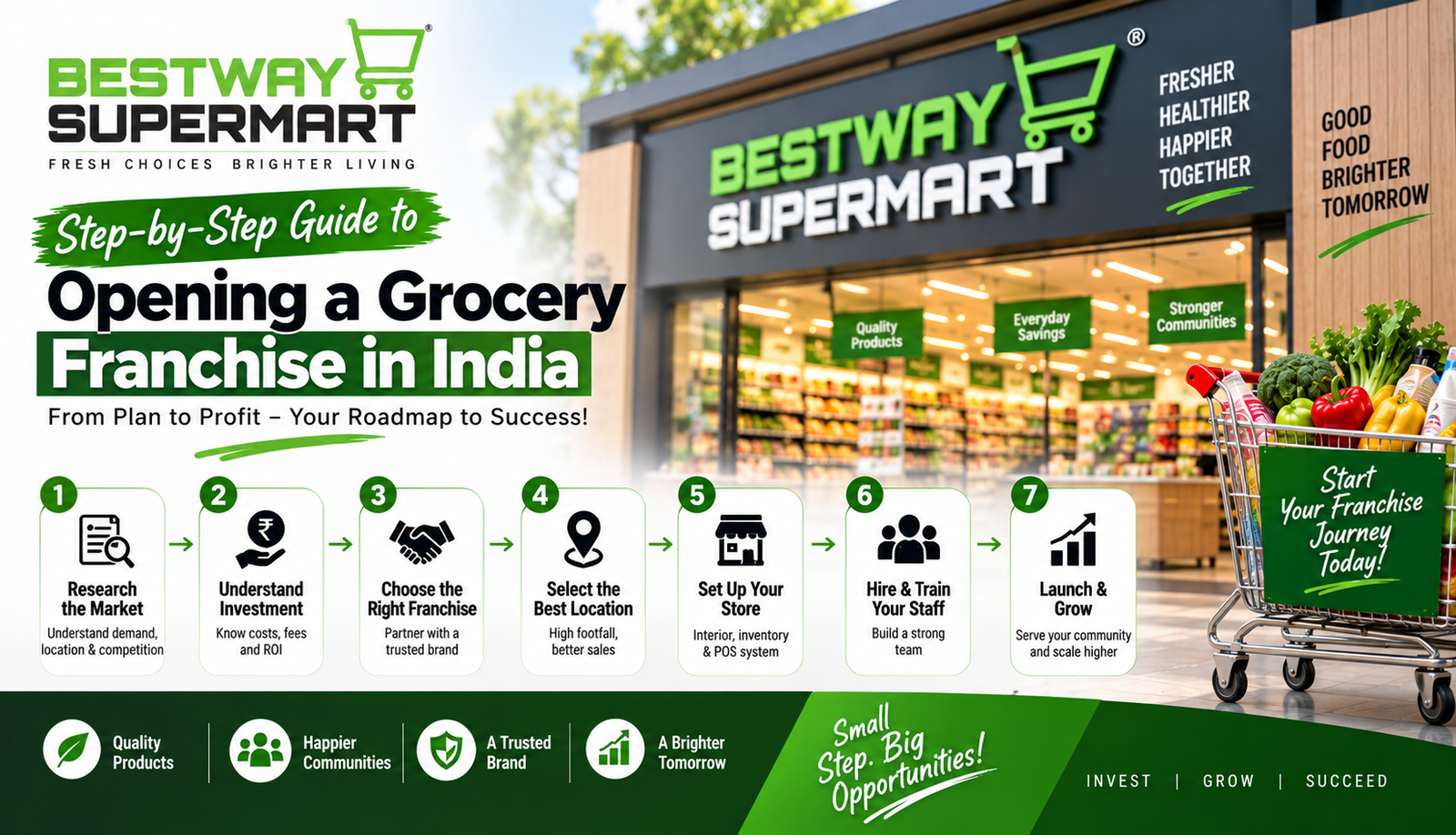
Opening a grocery store can be an exciting business opportunity, especially when you combine everyday consumer demand with an established franchise model. If you are considering a grocery franchise in India, the opportunity can be attractive because customers regularly purchase food, beverages, household essentials, personal-care products, and other daily-use items.
But opening a grocery franchise is not simply about finding a shop and filling the shelves. A successful store requires careful planning, financial preparation, the right franchise partner, a suitable location, efficient inventory management, trained employees, and a strong launch strategy.
If you are searching for how to open grocery franchise, this step-by-step guide will help you understand the process and the important decisions to make before opening your doors to customers.
Step 1: Understand the Grocery Franchise Model
Before investing, first understand how a franchise works. A franchise generally allows you to operate a store using an established brand’s name, systems, processes, and business model, subject to the terms of the franchise agreement.
Depending on the brand, support may cover areas such as store planning, branding, product sourcing, training, technology, and marketing.
However, every franchise is different. Before proceeding, understand exactly what the franchisor provides and what you are expected to manage yourself.
Important questions include:
- What is the total investment?
- Is there a franchise fee?
- Are there recurring charges?
- What store size is required?
- How is inventory supplied?
- What training is provided?
- Is marketing support available?
- What are the agreement and renewal terms?
A clear understanding at this stage can prevent confusion later.
Step 2: Decide Your Budget
The next step in opening a grocery franchise in India is preparing a realistic financial plan. Avoid looking only at the initial franchise fee because establishing and operating a store involves several other expenses.
Your budget may need to include:
- Franchise-related fees
- Property deposit
- Rent
- Store interiors
- Shelving and fixtures
- Refrigeration equipment
- POS and billing systems
- Initial inventory
- Signage and branding
- Staff salaries
- Licenses and registrations
- Marketing
- Working capital
Working capital deserves particular attention. A new store needs enough cash to pay regular expenses and replenish inventory while the customer base is developing.
Before investing, calculate how much money you can commit without creating unnecessary financial pressure.
Step 3: Research Different Franchise Brands
Do not choose the first franchise opportunity you come across. Compare several brands and examine what each one offers.
When researching a grocery franchise in India, look beyond brand recognition. Study the franchise’s business model, product categories, support system, store requirements, supply chain, technology, and contractual obligations.
Try to understand the franchise from the perspective of a store owner.
Ask yourself: If I had to operate this business every day, would the systems and support actually make my work easier?
Speaking with existing franchisees, where possible, can also provide practical insights into day-to-day operations.
Step 4: Select the Right Location
Location is one of the most important decisions you will make. A grocery store depends heavily on convenience, accessibility, and repeat customers.
When searching for a property, study:
- Nearby residential communities
- Population density
- Customer purchasing patterns
- Road visibility
- Accessibility
- Parking
- Local competition
- Rental costs
- Nearby offices and institutions
- Future development
For example, imagine a property close to several apartment communities. Residents may need groceries throughout the week, making the store convenient for routine shopping.
On the other hand, a large property in an isolated commercial area may look impressive but fail to generate sufficient repeat traffic.
The goal is to find a location that connects your store with the right customers.
Step 5: Complete Applicable Registrations
Once you have selected the franchise and property, identify the registrations and permissions applicable to your business.
Requirements can vary depending on your business structure, location, products sold, employees, and local regulations. Depending on the circumstances, a grocery retailer may need registrations or permissions relating to taxation, food retailing, shops and establishments, local authorities, employees, and other applicable areas.
Do not assume that requirements are identical across every state or city. Confirm the applicable requirements with the relevant government authorities or a qualified professional before opening.
Step 6: Design and Set Up Your Store
Store design should be based on the customer journey rather than appearance alone.
Customers should be able to enter comfortably, understand the layout, locate products, move through aisles, and reach the billing area without confusion.
Consider creating clearly organized sections for:
- Staples and grains
- Packaged foods
- Snacks
- Dairy and beverages
- Personal care
- Household products
- Fresh products
- Other daily-use essentials
Shelves should be properly labeled, products should be easy to locate, and frequently purchased items should remain readily accessible.
A well-organized store can make shopping faster and more comfortable.
Step 7: Set Up Inventory and Supplier Management
Inventory is at the heart of grocery retail. Customers expect commonly purchased products to be available when they visit.
Poor inventory management can create two problems. Overstocking ties up capital and can increase expiry or damage-related losses, while understocking can lead to missed sales and disappointed customers.
A practical inventory system should track:
- Fast-moving products
- Slow-moving products
- Reorder levels
- Expiry dates
- Damaged stock
- Seasonal demand
- Supplier deliveries
- Stock discrepancies
For example, if a particular product consistently sells quickly at the beginning of every month, your purchasing plan can account for that pattern.
Data-based ordering is generally more reliable than simply guessing how much stock you will need.
Step 8: Hire and Train Your Team
The customer experience is influenced heavily by store employees. Friendly and well-trained staff can make a supermarket feel organized and welcoming.
Depending on your store size, you may need employees for:
- Billing
- Customer assistance
- Shelf management
- Inventory
- Receiving stock
- Cleaning
- Store supervision
Training should cover billing, product handling, customer service, hygiene, stock procedures, and basic store policies.
Remember that employees represent your store every day. Investing time in training can help create consistent service.
Step 9: Prepare for the Grand Opening
Once your store is ready, create awareness before the launch.
A local opening campaign could include:
- Google Business Profile setup
- Social media announcements
- Local digital advertising
- Opening promotions
- Flyers
- Neighborhood communication
- Loyalty programs
- WhatsApp marketing
Your goal should be to attract people from the surrounding area and give them a reason to visit.
However, avoid relying entirely on opening-day discounts. The bigger objective is to turn new visitors into regular customers through reliable products, convenience, service, and a positive shopping experience.
Step 10: Monitor the Store After Opening
Opening the store is only the beginning. Once operations start, monitor performance regularly.
Important areas to track include:
- Daily and weekly sales
- Average bill value
- Customer visits
- Repeat customers
- Inventory turnover
- Stockouts
- Product wastage
- Employee performance
- Marketing results
- Operating expenses
This information can help you identify what is working and what needs improvement.
For example, if customers frequently ask for products that you do not stock, their feedback may reveal an opportunity to expand a particular category.
Common Mistakes to Avoid
Entrepreneurs learning how to open grocery franchise often focus heavily on investment and store setup while overlooking ongoing management.
Avoid:
- Choosing a property without market research
- Underestimating working capital
- Buying excessive inventory
- Ignoring slow-moving products
- Hiring without proper training
- Failing to monitor expenses
- Assuming the franchise brand guarantees customers
- Ignoring customer feedback
A franchise provides a framework, but the quality of local execution still matters.
FAQs About Opening a Grocery Franchise in India
1. How to open grocery franchise in India?
Start by researching franchise brands, deciding your budget, selecting a suitable store format and location, completing applicable registrations, setting up the store, arranging inventory, hiring employees, and launching your marketing strategy.
2. How much investment is required for a grocery franchise?
The investment varies by brand, store size, city, property costs, interiors, equipment, inventory, and working capital. Always request a detailed investment breakdown from the franchise company.
3. Is a grocery franchise profitable in India?
A grocery franchise can be profitable, but profitability depends on location, customer demand, product mix, margins, rent, inventory management, competition, and operating efficiency. No business model guarantees a particular profit.
4. How important is location for a grocery franchise?
Location is extremely important because grocery shopping is convenience-driven. Residential density, accessibility, visibility, parking, competition, and rental costs should all be assessed before finalizing a property.
5. What products should a grocery franchise sell?
The product mix can include staples, packaged foods, dairy, beverages, snacks, household products, personal-care items, and other daily essentials. The exact assortment should reflect customer demand and the franchise model.
6. Do I need previous retail experience?
Previous experience can be helpful, but it is not necessarily required for every franchise. Training and operational support may be available depending on the franchise company.
7. How long does it take to open a grocery franchise?
The timeline varies according to property selection, agreement completion, registrations, store construction, equipment installation, inventory setup, and staff recruitment. A franchise company can provide a more specific timeline for its model.
Final Thoughts: Start Your Grocery Franchise Journey
Opening a grocery franchise in India can be an exciting way to enter the retail sector, but success starts with preparation. Choosing the right franchise partner, creating a realistic budget, finding a suitable location, managing inventory carefully, training employees, and understanding your local customers are all essential parts of the process.
If you are researching how to open grocery franchise, do not rush into the first opportunity you find. Compare franchise models, understand the financial commitments, read the agreement carefully, and evaluate the local market before making your final decision.
For entrepreneurs exploring grocery retail opportunities, Bestway Supermart is a brand you can consider as part of your franchise research. Learn about the available franchise model, requirements, support, and investment structure before deciding whether it fits your business goals.
Ready to take the next step? Connect with Bestway Supermart and explore the possibilities of starting your own grocery franchise business in India.